What Is Gadwal Pattu Sarees? Discover the Royal Art of Gadwal Silk
When it comes to traditional Indian sarees, few can match the elegance, craftsmanship, and heritage of Gadwal Pattu Sarees. Known for their luxurious silk body, striking borders, and intricate zari work, these sarees have been cherished for generations.
But what is Gadwal Pattu Sarees, and what makes them so special? Let’s take a journey into the world of Gadwal silk, where tradition meets timeless beauty.
What Are Gadwal Pattu Sarees?
Gadwal Pattu Sarees are traditional handwoven silk sarees associated with the Gadwal region of Telangana, India. They are especially famous for their distinctive combination of a rich silk border and a comparatively lightweight body.
One of the most fascinating features of a traditional Gadwal saree is its craftsmanship. Skilled weavers carefully combine different weaving techniques to create beautiful sarees featuring:
- Rich silk fabric
- Intricate zari borders
- Traditional motifs
- Temple-inspired designs
- Floral and geometric patterns
- Contrasting body and border colours
The result is a saree that feels elegant and festive while remaining comfortable to wear.
What Makes Gadwal Pattu Sarees Special?
The beauty of Gadwal Pattu Sarees lies not only in their appearance but also in the craftsmanship behind every weave.
1. Traditional Handloom Heritage
Gadwal sarees have a long-standing handloom tradition. Experienced weavers use carefully developed techniques passed from one generation to another.
2. Lightweight Yet Grand
One of the appealing characteristics of Gadwal silk sarees is their relatively lightweight feel compared with many other traditional silk sarees. This makes them suitable for weddings, festivals, religious occasions, and celebrations.
3. Rich Zari Work
Golden or silver zari is often used to create decorative borders and traditional motifs. The zari gives the saree its distinctive festive appearance.
4. Beautiful Colour Combinations
Gadwal sarees are known for attractive colour contrasts. A bright silk border combined with a contrasting saree body can create an elegant traditional look.
5. Unique Weaving Craftsmanship
The construction of a Gadwal saree requires precision and patience. The body, border, and pallu are carefully woven to create a harmonious design.
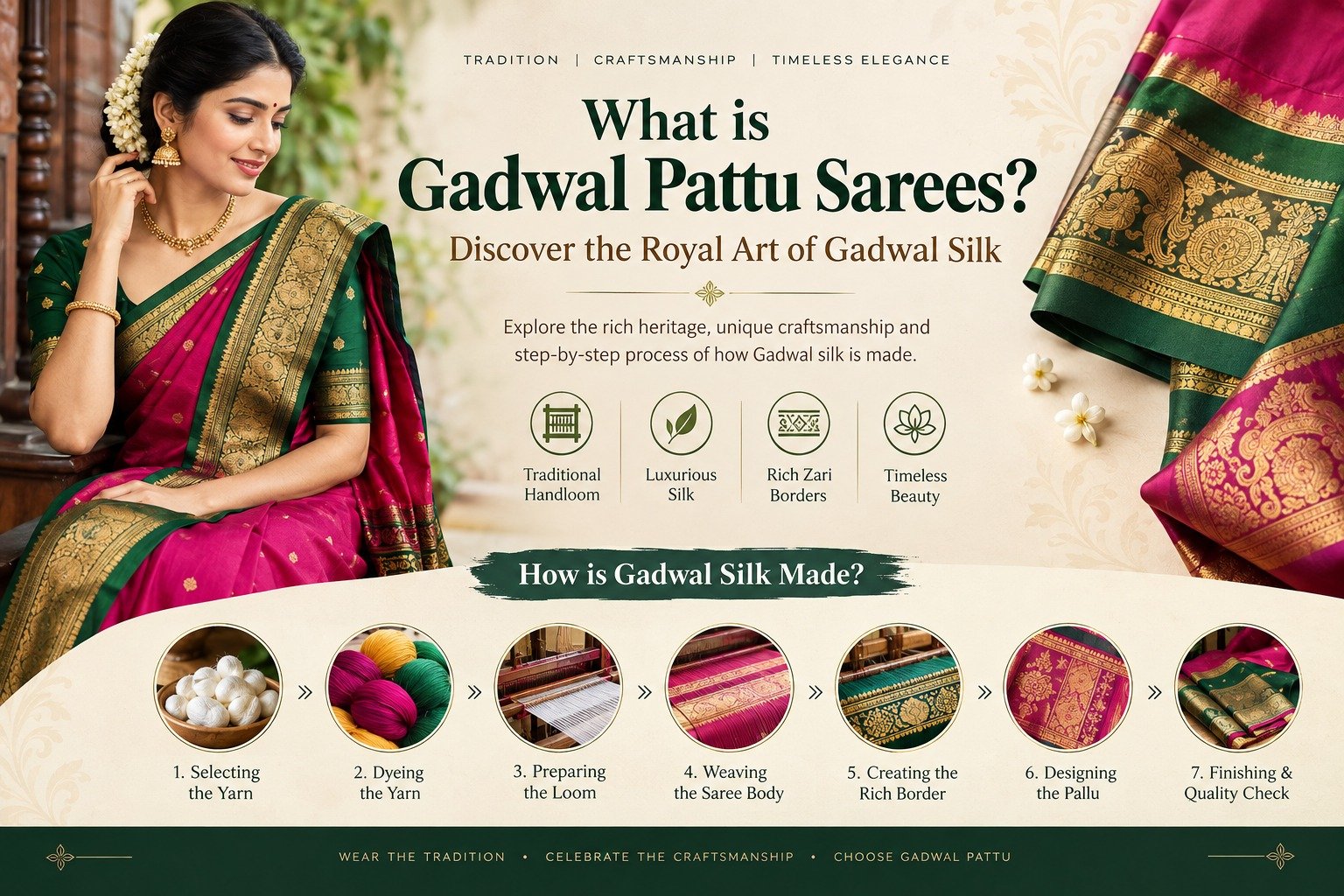
How Is Gadwal Silk Made?
Now comes the interesting part: how is Gadwal silk made?
Creating a traditional Gadwal silk saree is much more than simply weaving threads together. It is a detailed process involving yarn preparation, dyeing, design planning, weaving, and finishing.
Step 1: Selecting the Yarn
The process begins with selecting suitable silk yarn for the saree. The quality of the yarn plays an important role in determining the final texture, shine, and durability of the saree.
Depending on the design, different yarns may be selected for the body, border, and pallu.
Step 2: Preparing and Dyeing the Yarn
The yarn is prepared and dyed according to the desired colour combination.
Traditional Gadwal designs often use contrasting colours to create a visually striking difference between the saree body and the border.
Popular combinations may include:
- Pink Body + Green Border
- Yellow Body + Red Border
- Blue Body + Magenta Border
The colour selection is an important part of the saree’s final appearance.
Step 3: Preparing the Loom
After the yarn is prepared, the weaver sets up the handloom.
The warp threads are carefully arranged according to the required length and design. This stage requires accuracy because even a small mistake can affect the weaving pattern.
Step 4: Weaving the Saree Body
The main body of the saree is woven using the prepared yarn.
The weaver carefully controls the threads to maintain uniformity throughout the saree. Traditional motifs may be incorporated depending on the design.
Step 5: Creating the Rich Border
The border is one of the most recognizable elements of a Gadwal saree.
The weaver carefully works on the contrasting border using silk and zari according to the design.
Traditional patterns can include:
- Temple motifs
- Floral patterns
- Geometric designs
- Peacock motifs
- Traditional zari patterns
Step 6: Designing the Pallu
The pallu is given special attention because it forms an important visual element of the saree.
Intricate zari patterns and traditional motifs can transform the pallu into a rich decorative panel.
Step 7: Finishing and Quality Checking
After weaving is completed, the saree undergoes finishing and inspection.
The weaver or artisan checks the fabric, borders, motifs, weaving consistency, and overall appearance before the saree is prepared for sale.
Gadwal Pattu Sarees for Weddings and Festivals
Gadwal silk sarees are particularly popular for traditional celebrations.
Their combination of vibrant colours, elegant silk, and zari craftsmanship makes them suitable for:
- Weddings
- Engagement ceremonies
- Festivals
- Religious functions
- Family celebrations
- Traditional events
- Special occasions
A Gadwal saree can create a graceful traditional appearance without feeling overly heavy.
How to Choose the Perfect Gadwal Pattu Saree
When buying a Gadwal Pattu Saree, consider these important factors:
Check the Fabric
Look for a smooth, comfortable silk texture and consistent weaving.
Examine the Border
The border is an important characteristic of the saree. Check the neatness of the weaving and zari work.
Look at the Pallu
A beautifully designed pallu can significantly enhance the overall appearance of the saree.
Choose the Right Colour
For weddings, rich traditional colours can create a grand appearance. For festivals and daytime occasions, brighter or lighter combinations can offer a refreshing look.
Check the Weaving and Finish
Look for clean edges, consistent motifs, and good overall finishing.
The Timeless Beauty of Gadwal Silk
The story of Gadwal Pattu Sarees is ultimately a story of craftsmanship, tradition, and patience.
Behind every beautiful saree is the work of skilled artisans who carefully transform individual threads into a piece of wearable heritage.
So, when someone asks “what is Gadwal Pattu Sarees?”, the answer is more than simply “a silk saree.”
It is a traditional handloom creation that represents the artistry and cultural heritage of the Gadwal weaving tradition.
And when you ask “how is Gadwal silk made?”, the answer lies in every stage—from carefully prepared yarn and colour selection to handloom weaving, intricate borders, beautiful pallus, and detailed finishing.
Bring Home the Heritage
A Gadwal Pattu Saree is not just an addition to your wardrobe. It is a celebration of Indian handloom artistry.
Whether you are looking for a saree for a wedding, festival, or special family occasion, Gadwal silk offers a beautiful combination of tradition, elegance, craftsmanship, and timeless style.
Wear the Tradition. Celebrate the Craftsmanship.
Explore beautiful Gadwal Pattu Sarees and discover the timeless elegance of traditional Indian handloom.
Shop Gadwal Pattu SareesFrequently Asked Questions About Gadwal Pattu Sarees
What is Gadwal Pattu Sarees?
Gadwal Pattu Sarees are traditional silk sarees associated with the Gadwal weaving tradition of Telangana, known for their silk fabric, distinctive borders, zari work, and traditional motifs.
How is Gadwal silk made?
Gadwal silk sarees are created through several stages, including yarn selection, yarn preparation and dyeing, loom preparation, weaving the saree body, creating the border, designing the pallu, and final quality checking.
Are Gadwal Pattu Sarees suitable for weddings?
Yes. Their rich silk appearance, traditional motifs, contrasting colours, and zari borders make Gadwal Pattu Sarees a popular choice for weddings, festivals, and other special occasions.
What makes Gadwal Sarees unique?
Gadwal Sarees are appreciated for their distinctive weaving tradition, elegant silk body, decorative borders, zari work, traditional motifs, and beautiful colour combinations.